
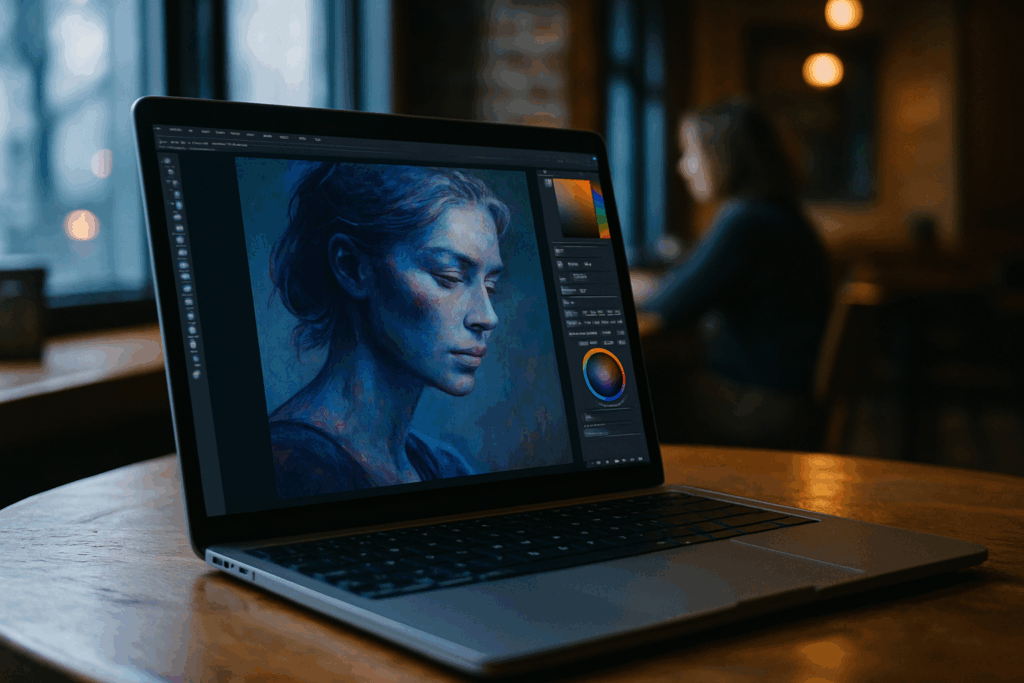
How Digital Galleries Are Redefining Accessibility
The world of art is no longer confined to museum walls or exclusive gallery openings. Virtual exhibitions are expanding who can see, experience, and buy art removing many of the physical, economic, and logistical barriers that have historically limited access.
New Frontiers for Art Appreciation
No boundaries: Geographic location is no longer a constraint. Anyone with internet access can view global exhibitions in real time.
Lower cost of entry: Without the expenses of travel and entry fees, art becomes more approachable for casual viewers and serious collectors alike.
A Breakthrough for Emerging Artists
Virtual spaces offer new creators their moment in the spotlight often without needing the approval of traditional gatekeepers like galleries or critics.
Increased visibility: Online platforms expose artists to a wider, more international audience.
Direct exposure to buyers and curators: Art can be seen (and sold) without relying on gallery representation.
Global Markets at a Click
The rise of digital exhibitions allows collectors and curators to explore art beyond borders and across disciplines with unprecedented ease.
Instant access to global work: Professionals can scout talent and acquire pieces from anywhere, anytime.
Cross border connections: Virtual shows streamline introductions between creators and institutions, enabling cultural exchange and commerce.
Art is becoming more democratic less about location, and more about vision, access, and reach. The traditional physical gallery still plays a role, but the virtual space is rewriting who gets seen and who gets to see.
The Technology Behind the Trend
Virtual exhibitions in 2024 aren’t just slideshows with a fancy header anymore. They’ve leveled up into 3D experiences that mimic or sometimes surpass the feel of walking through a brick and mortar gallery. These digital spaces let viewers move room to room, zoom in on textures, and explore curated environments built entirely online. It’s not passive viewing it’s digital immersion.
A big part of this evolution is powered by VR and AR. Strap on a headset or use your phone, and you’re in the gallery, navigating artwork as though it were hanging inches from your face. No flight, no dress code, no fuss. Some platforms are even experimenting with haptic feedback for added realism. It’s a new kind of connection with the art, one that’s tech driven but increasingly intimate.
Interactive features are making these experiences social, too. Think live artist walkthroughs, real time Q&As, and chat tools that let you engage with other attendees or curators while you wander through an exhibit. It’s not just about looking it’s about joining. The tech isn’t just replicating a gallery; it’s reimagining what a gallery can be.
Shifting Creative Freedom and Curation
Virtual exhibitions have cracked open the limits of gallery walls. Curators are no longer stuck designing shows around physical space or foot traffic. Digital platforms allow for freer experimentation looping narratives, nonlinear layouts, soundscapes, interactive triggers all without the budget or logistical strain of a physical install.
For viewers, the experience shifts too. Instead of being led room by room or relying on a timed tour, audiences take control. They wander, zoom, click, pause. They piece together meaning at their own pace. That autonomy is changing how online art is explored and how meaning is made.
This new structure also liberates artists. Some are merging video, coding, sculpture, and archive into hybrid work that couldn’t exist in a white cube. Others use digital settings to subvert old display norms. The walls are still here just not the same walls we knew.
The result? Experiences that are less about passive looking and more about active discovery. Less about fixed rules, more about open possibility.
Commercial Viability and Artist Empowerment

The old rules around selling art are breaking down. Direct to buyer platforms have moved in where galleries once held control. Artists are now building storefronts on platforms like Instagram, Patreon, and Foundation cutting out middlemen and keeping more of what they earn. It’s not just about money; it’s about control and sustainability.
With better access to viewer data, creators can see who’s watching, when, and for how long. That insight helps artists rethink everything from when they drop new work to how they talk about it. Instead of guessing, they’re building smarter strategies to find and keep collectors.
And then there’s digital ownership. NFTs took a hit in the mainstream conversation, but in the art world, they’re still unlocking new models. Pieces can be sold with built in royalties, authenticated on blockchain systems, and shown in digital spaces that never close. Selling art today doesn’t always mean handing over a painting it could mean transferring a code, a copy, or an entire experience.
Limitations and Critiques Still Loom
While virtual exhibitions are transforming how we engage with art, they aren’t without drawbacks. As with any innovation, there are growing pains some technical, others deeply human.
Screen Fatigue and Emotional Disconnect
Art is often an emotional experience, and that connection can be dulled when filtered through a screen.
Extended time spent viewing virtual exhibitions can lead to screen fatigue, reducing engagement
The physical presence of a piece the texture, scale, atmosphere is hard to replicate digitally
Audiences report a sense of emotional distance compared to in person visits
Questions of Authenticity and Sensory Experience
Virtual spaces challenge traditional assumptions about what constitutes a ‘real’ art viewing experience.
Digital reproductions can distort colors, scale, and finer details
Some critics argue that screens sanitize the sensory and physical context artwork is meant to inhabit
The question persists: can a digital rendering ever fully replace the in person aura of original artworks?
Unequal Access to Technology
Even as virtual exhibitions aim to democratize access, they may unintentionally exclude those on the other side of the digital divide.
High speed internet and up to date devices are required to explore virtual galleries effectively
Creators in underserved regions may struggle with platform compatibility or availability
Platforms often overlook accessibility needs such as language localization or screen reader integration
Navigating these limitations is an important part of shaping the future of virtual art spaces. As the technology improves, so too must our understanding of inclusivity, experience, and value in the digital realm.
What Industry Trends Suggest Moving Forward
The line between physical and virtual isn’t just fading it’s turning into the standard. Most major art fairs and institutions now default to hybrid models that blend in person viewing with immersive online layers. The reach is wider, the logistics are leaner, and the potential for exposure is far beyond a local crowd on opening night.
At the same time, platforms are evolving fast. New interfaces, spatial tech, and audience features keep shifting the way artists and curators can present work and how viewers engage with it. What worked six months ago might feel outdated now. Flexibility is part of the job description.
The bigger picture? Access keeps getting more democratic. A teenager in Lagos can view the same show as a collector in London. Artists no longer need to live in global cities to be discovered. As barriers drop, voices diversify. Art becomes less about where you are and more about what you’re saying.
More on this: future of online shows
Why This Moment Matters
This isn’t just a trend cycle it’s a reset. The way art is being experienced, bought, and distributed is undergoing a foundational shift. Screens are no longer passive surfaces; they’re becoming primary stages. For artists, collectors, and galleries, this means the old playbook isn’t enough. What worked in a purely physical world doesn’t fully translate in a hybrid one.
Virtual exhibitions aren’t trying to replace the gallery walls they’re rewriting how we think about walls altogether. Done right, they extend reach, add context, and open up access. But the key is integration: combining the depth and intimacy of physical shows with the speed and scale of digital platforms.
Artists who lean in now experiment with formats, embrace new tools, and learn the language of digital spaces stand to build not just audiences, but staying power. For galleries and collectors, early adaptation builds relevance and resilience in a market that’s evolving fast.
So no, this isn’t a gimmick. It’s infrastructure. Miss it, and you might miss the future. For those ready to dive deeper, here’s a closer look at the future of online shows.
 There is a specific skill involved in explaining something clearly — one that is completely separate from actually knowing the subject. Stepheno Yatesingers has both. They has spent years working with art exhibitions and reviews in a hands-on capacity, and an equal amount of time figuring out how to translate that experience into writing that people with different backgrounds can actually absorb and use.
Stepheno tends to approach complex subjects — Art Exhibitions and Reviews, Art Movement Highlights, Creative Project Ideas being good examples — by starting with what the reader already knows, then building outward from there rather than dropping them in the deep end. It sounds like a small thing. In practice it makes a significant difference in whether someone finishes the article or abandons it halfway through. They is also good at knowing when to stop — a surprisingly underrated skill. Some writers bury useful information under so many caveats and qualifications that the point disappears. Stepheno knows where the point is and gets there without too many detours.
The practical effect of all this is that people who read Stepheno's work tend to come away actually capable of doing something with it. Not just vaguely informed — actually capable. For a writer working in art exhibitions and reviews, that is probably the best possible outcome, and it's the standard Stepheno holds they's own work to.
There is a specific skill involved in explaining something clearly — one that is completely separate from actually knowing the subject. Stepheno Yatesingers has both. They has spent years working with art exhibitions and reviews in a hands-on capacity, and an equal amount of time figuring out how to translate that experience into writing that people with different backgrounds can actually absorb and use.
Stepheno tends to approach complex subjects — Art Exhibitions and Reviews, Art Movement Highlights, Creative Project Ideas being good examples — by starting with what the reader already knows, then building outward from there rather than dropping them in the deep end. It sounds like a small thing. In practice it makes a significant difference in whether someone finishes the article or abandons it halfway through. They is also good at knowing when to stop — a surprisingly underrated skill. Some writers bury useful information under so many caveats and qualifications that the point disappears. Stepheno knows where the point is and gets there without too many detours.
The practical effect of all this is that people who read Stepheno's work tend to come away actually capable of doing something with it. Not just vaguely informed — actually capable. For a writer working in art exhibitions and reviews, that is probably the best possible outcome, and it's the standard Stepheno holds they's own work to.