
The Language of Less: O’Keeffe’s Break from Tradition
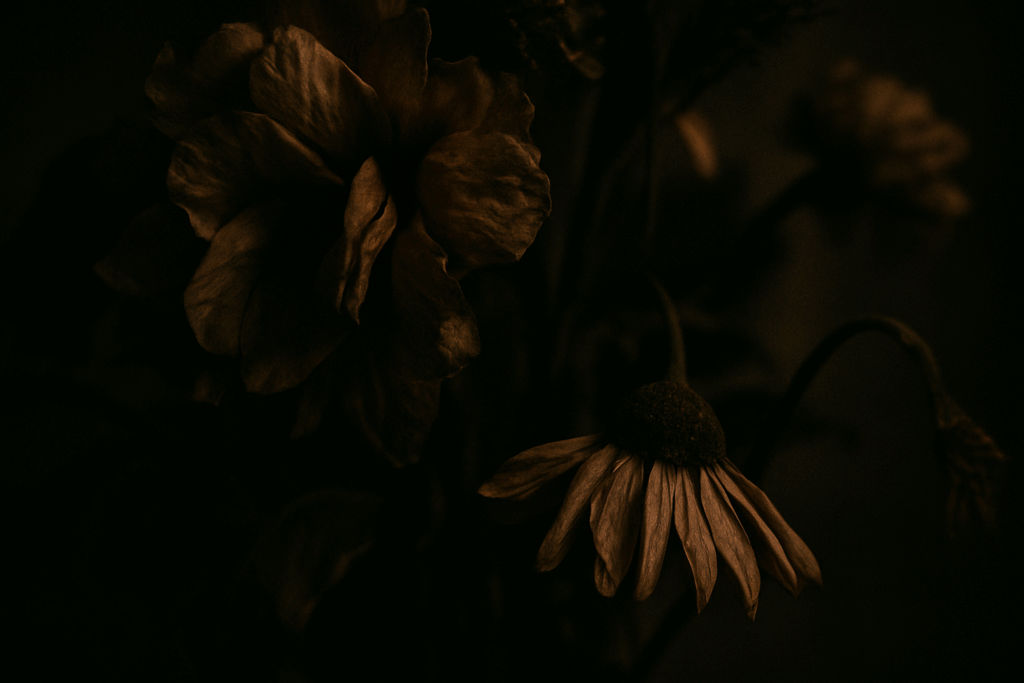
Georgia O’Keeffe didn’t just paint flowers she stripped them down to their essentials. In an era when early modernists were leaning into abstraction, chaos, and complexity, O’Keeffe did something quieter. She reduced. A petal, a skull, a horizon line what others saw as fragments, she turned into focal points. Her minimalism wasn’t driven by trend but by clarity. Where others rushed to fill, she cut away.
The American Southwest played a central role in this vision. Vast deserts, bleached bones, and bare mesas weren’t just inspiration they were structure. O’Keeffe translated these spaces into compositions that carried silence like weight. Her palette was spare. Her lines, intentional. Every choice she made pushed against overstatement. No clutter. No noise. Just form, light, and negative space.
What results is a kind of distilled intensity. Simplicity was her medium, but the impact was anything but simple. Her canvas wasn’t crowded because it didn’t have to be. Instead, it focused you. Drew you in. Forced you to see what’s usually skimmed past. Her approach created room for breathing, for looking, for remembering.
In doing less, O’Keeffe made her point louder than most.
Redefining the Feminine in Art
For decades, Georgia O’Keeffe’s flower paintings were interpreted often reductively as overtly feminine, even erotic. Critics eager to project meaning onto her soft curves and painterly petals turned her bold visual language into a gendered conversation she didn’t ask to lead. The truth is more grounded than the myth. O’Keeffe never intended her work to be boxed by gendered readings. She painted what interested her: shape, structure, color in tension with shadow. The rest was projection.
Instead of fragility, her work shows control. The close framing, the stripped down detail it’s more architectural than delicate. Her compositions aren’t whisper thin thoughts; they’re honed decisions. O’Keeffe’s refusal to play into expectations of what ‘feminine art’ should be helped clear space for women in art to define their own terms. Her minimalism wasn’t about subtlety it was a sharp, deliberate edge.
She didn’t just shift the gaze. She confronted it, without apology.
Modern Art’s Quiet Blueprint
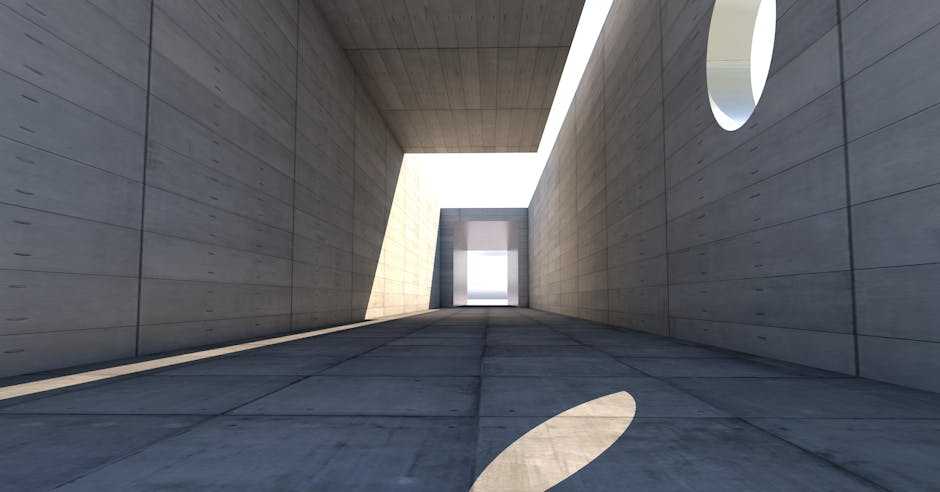
Georgia O’Keeffe’s minimalist approach to form and composition has left a lasting imprint far beyond the traditional boundaries of fine art. Her ability to convey profound emotion through reduction through space, color, and shape laid the groundwork for many of today’s aesthetic trends we see not just in art, but across lifestyle, commercial, and cultural domains.
The Echoes in Contemporary Design
O’Keeffe’s visual language bold shapes, neutral tones, and simplified forms remains a silent influence in many corners of modern design:
Fine Art: Installations and canvases that use negative space and minimal palettes often draw directly from O’Keeffe’s sensibilities.
Graphic Design: Clean lines and organic shapes in branding and editorial layouts resonate with her aesthetic fingerprints.
She created with intention, and that quiet clarity continues to inspire a generation that values focus over frenzy.
Cross Disciplinary Influence
O’Keeffe’s minimalism didn’t just shape visual art it broke into unexpected areas of creative work:
Architecture: Designers reference her stark landscapes and structural compositions in minimalist builds, desert inspired interiors, and mindful use of open space.
Fashion: Neutral hues, flowing lines, and simplicity in form reflect an O’Keeffe mindset design with purpose and restraint.
Branding: Wellness and high end lifestyle brands borrow her softness and strength, using sparse visuals and calming tones to convey authenticity.
Aesthetic Forecasting: Wellness & Lifestyle
Long before wellness was a visual language built on simplicity, calm, and intentionality, O’Keeffe was painting it. Her affinity for isolation, nature, and reduction has become a design ethos for many visual narratives today.
Think of today’s minimalist Instagram brands with wide margins, muted tones, and grounding aesthetics.
Or the visuals of yoga studios, skincare lines, and mental wellness campaigns often echoing the natural, stripped down presence of O’Keeffe’s work.
She didn’t just paint flowers or bones. She offered a visual rhythm that still feels modern precise, powerful, and quiet.
O’Keeffe’s influence doesn’t shout, but it’s everywhere.
Shared Threads: O’Keeffe and Kahlo
Georgia O’Keeffe and Frida Kahlo came from different worlds O’Keeffe from the windswept deserts of New Mexico, Kahlo from the vibrant intensity of Mexico City but their impact radiates along a shared axis. Both women turned inward, drawing from landscape and body, myth and memory, to build visual languages that were deeply personal. They stripped away pretense but spoke volumes.
O’Keeffe’s minimalism a bone, a petal, a horizon line reduced the world to its essence. Kahlo’s symbolism leaned in the opposite direction: layered, lush, often painful. But both artists carved space for deeply felt narratives. O’Keeffe’s silence and Kahlo’s storm ultimately echoed the same idea: a refusal to be defined by others. You feel it in Kahlo’s use of iconography and in O’Keeffe’s use of empty space.
Where they align most is in their construction of personal myth. O’Keeffe, through isolation and discipline. Kahlo, through self portrait and pain. Each became more than just an artist they became a symbol. For creators today, their stories are a reminder that legacy isn’t always built by noise, but by authenticity.
More on Kahlo’s enduring influence can be found here: Frida Kahlo Legacy
Why It Still Resonates
In an era where every scroll delivers a new burst of color, animation, or noise, Georgia O’Keeffe’s work reads like a deep breath. Her compositions quiet, precise, and stripped to essentials don’t compete for attention. They command it, patiently. A single petal. A contour line. Negative space that says more than a thousand pixels.
O’Keeffe’s restraint feels radical now. It’s the antithesis of overstimulation, and that’s exactly why it still lands. Her art offers something culture craves: pause. In a digital environment swollen with content, minimalism isn’t just an aesthetic it’s an act of defiance.
Today’s minimalist wave owes her a subtle but unmistakable debt. From Instagram grids washed in neutrals, to brands leaning hard into less is more campaigns, the design DNA links back to the bones and blossoms of O’Keeffe’s vision. Her discipline lives on in modern gallery retrospectives and quietly influential collections, reinforcing that clarity is timeless even when the world isn’t.
For a look at another icon who shaped narrative through form, explore the Frida Kahlo Legacy.
 Johner Hazardics writes the kind of art movement highlights content that people actually send to each other. Not because it's flashy or controversial, but because it's the sort of thing where you read it and immediately think of three people who need to see it. Johner has a talent for identifying the questions that a lot of people have but haven't quite figured out how to articulate yet — and then answering them properly.
They covers a lot of ground: Art Movement Highlights, Essential Techniques and Tools, Art Exhibitions and Reviews, and plenty of adjacent territory that doesn't always get treated with the same seriousness. The consistency across all of it is a certain kind of respect for the reader. Johner doesn't assume people are stupid, and they doesn't assume they know everything either. They writes for someone who is genuinely trying to figure something out — because that's usually who's actually reading. That assumption shapes everything from how they structures an explanation to how much background they includes before getting to the point.
Beyond the practical stuff, there's something in Johner's writing that reflects a real investment in the subject — not performed enthusiasm, but the kind of sustained interest that produces insight over time. They has been paying attention to art movement highlights long enough that they notices things a more casual observer would miss. That depth shows up in the work in ways that are hard to fake.
Johner Hazardics writes the kind of art movement highlights content that people actually send to each other. Not because it's flashy or controversial, but because it's the sort of thing where you read it and immediately think of three people who need to see it. Johner has a talent for identifying the questions that a lot of people have but haven't quite figured out how to articulate yet — and then answering them properly.
They covers a lot of ground: Art Movement Highlights, Essential Techniques and Tools, Art Exhibitions and Reviews, and plenty of adjacent territory that doesn't always get treated with the same seriousness. The consistency across all of it is a certain kind of respect for the reader. Johner doesn't assume people are stupid, and they doesn't assume they know everything either. They writes for someone who is genuinely trying to figure something out — because that's usually who's actually reading. That assumption shapes everything from how they structures an explanation to how much background they includes before getting to the point.
Beyond the practical stuff, there's something in Johner's writing that reflects a real investment in the subject — not performed enthusiasm, but the kind of sustained interest that produces insight over time. They has been paying attention to art movement highlights long enough that they notices things a more casual observer would miss. That depth shows up in the work in ways that are hard to fake.