
Where Expression Took a Turn
Neo Expressionism didn’t land in a vacuum. It was a reply loud, messy, and emotional to what came before. By the mid 1970s, art had gone cerebral. Minimalism stripped down everything to pure shape and repetition. Conceptual art leaned into theory and rejected the physical object altogether. Audiences were often left standing in clean white rooms, peering at sterile forms, trying to decode statements instead of feeling something.
But the world outside the galleries wasn’t clean or sterile. The 1970s were loaded with political unrest, economic instability, and cultural upheaval. There was a rising hunger for art that could speak to anxiety, anger, identity a call for feeling over form. Neo Expressionism answered that call by throwing emotion back onto the canvas. Rough, aggressive brushwork. Distorted figures. Messiness that wasn’t trying to be pretty.
It wasn’t just a revival of expression it was a rebuke. A rejection of the cool detachment of prior movements. Neo Expressionism didn’t care for perfect composition or intellectual distance. It dug deep, pulled raw emotion to the surface, and poured it onto walls, floors, and even broken plates. It carried a mood: paint like you mean it, or don’t bother.
Raw Energy on the Canvas
Neo Expressionism doesn’t whisper it shouts. The movement ripped away the clean lines and quiet restraint of modernist minimalism, replacing them with thick strokes, jarring figures, and colors that nearly brawl on the canvas. There’s no hiding the artist behind a concept here you see the hand, the urgency, the moment of making.
This rawness isn’t just for show. Each brushstroke pulses with emotion. Paint becomes a vehicle for rage, grief, identity, and memory. Perspective is warped, forms are broken, and everything’s drenched in feeling. It’s subjective on purpose. The point isn’t to explain, but to evoke.
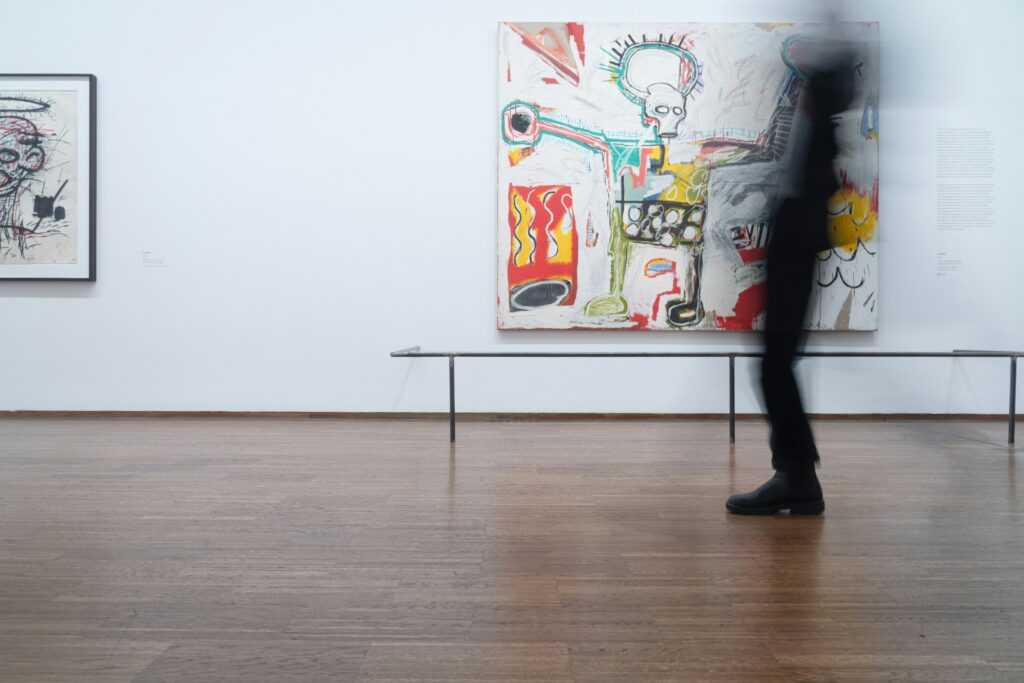
Julian Schnabel’s large scale paintings feel brutal and romantic at once massive in both size and sentiment. Jean Michel Basquiat’s graffiti like scrawls cut across race, power, and culture with deadly poetry. Anselm Kiefer merges the personal and historical, dragging heavy textures across landscapes of loss and reckoning. Different voices, same charge: make it matter, make it visceral.
In a time hungry for surface polish, these artists chose to bleed through the brush.
Rejection Meets Reinvention

Neo Expressionism wasn’t just about raw paint and emotion it was a direct jab at the elitism that had crept into the art world. The movement didn’t wait for permission or institutional blessing. These artists walked into the gallery, kicked tradition in the ribs, and hung up canvases that screamed with feeling. Academic coolness? Out. Market driven polish? No thanks.
What made Neo Expressionists hard to categorize was exactly what gave the movement legs. They melted genre lines, using whatever media they felt like spray paint, oil, mixed materials, sculptural elements. Styles no longer lived apart. You had classical figures tangled with graffiti, allegory beside abstraction, Renaissance nods on punk drenched palettes. The result was messy and unapologetically alive.
They didn’t shy away from big themes, either. History, myth, religion topics usually reserved for oil wearing scholars were dragged back into the spotlight. But there was nothing delicate about it. Artists like Kiefer and Baselitz didn’t paint the past with reverence; they painted it like a battlefield, where memory and anger fought for space. It was rebellion, not nostalgia. These were artists reworking the grand narratives on their own terms, not looking to be polite.
Neo Expressionism wasn’t tidy, but it was truthful. And that truth rattled the gatekeepers.
Neo Expressionism vs. The Movements That Came Before
Neo Expressionism didn’t come out of nowhere. It stood on the shoulders of giants like German Expressionism and Abstract Expressionism movements that also prioritized emotion, rawness, and individual vision. You can see the echoes: jagged forms, bold colors, unfiltered angst. But Neo Expressionists weren’t just copying; they were weaponizing these influences in a time when art had become increasingly cerebral and detached.
Where German Expressionists captured internal chaos in response to war and disillusionment, and Abstract Expressionists made the canvas a battlefield for the soul, Neo Expressionists did something messier. They carried this emotional language into a world that had started to value theory over feeling. Minimalism had stripped art down to grids and silence. Conceptual art had prioritized the idea over the object. Neo Expressionism threw the body and the brushstroke violently back into the frame.
Compared to the modernists who believed in ideal forms, in honest lines pointing to shared human truths Neo Expressionists were skeptical. Their work often mocked the grand narratives. Instead of chasing timeless beauty or clarity, they dug into the personal, the political, the fractured. It was a shift from universal truths to subjective realities, from clean precision to visceral storytelling.
For a deeper contrast between these artistic paradigms, check out Modernism vs Postmodernism.
Legacy and Relevance Today
Still Resonant in a Digital World
In an age defined by curated perfection and digital filters, Neo Expressionism’s visceral aesthetic continues to speak loudly. Its rawness cuts through the sleek interfaces and algorithm driven content that dominate modern life. The movement’s value persists because it emphasizes something timeless: the complexity and intensity of human emotion.
Rejects perfection in favor of authenticity
Confronts viewers with ambiguity, vulnerability, and imperfection
Offers a visual antidote to digital saturation
A Precursor to Visual Activism
Before the widespread use of social media to tell personal and political stories, Neo Expressionism was already doing the work. Its artists used raw symbolism, distorted imagery, and aggressive techniques to shout rather than whisper. These qualities make it a direct predecessor to today’s visual activism.
Prioritized emotion and subjectivity over detached commentary
Gave voice to marginal stories and brutal histories
Paved the way for visual narratives with a social edge
Shaping Postmodern Sensibilities
Neo Expressionism helped shape the eclectic, layered, and self aware ethos of postmodern art. It blurred fact and fiction, high and low culture, present and past often in the same frame. It wasn’t about solving problems but expressing them fully.
Embraced contradictions and chaotic composition
Challenged the notion of linear artistic progress
One of the many turning points from modernism’s search for truth to postmodernism’s layered multiplicity
Further Read: Modernism vs Postmodernism
Final Frame: Art That Cuts Through the Noise
The Value of Raw in a Refined World
In an era where digital perfection and algorithm driven aesthetics dominate, Neo Expressionism stands out by embracing chaos, imperfection, and emotional messiness. Its rawness isn’t just a style choice it’s a statement. The movement reminds us that tactile, visceral art still has the power to disrupt and move.
Today’s visual culture is often curated, filtered, and edited
Neo Expressionist art offers a counterpoint: imperfect, urgent, and emotionally direct
The rough textures and forceful imagery disrupt passive viewing and demand engagement
What Machines Can’t Imitate
Artificial intelligence can replicate patterns, optimize colors, and even mimic creativity but it lacks subjective experience. Neo Expressionism centers emotional expression that’s deeply human and deeply personal.
Machines can generate content, but not lived emotional truth
Neo Expressionist work is rooted in individual perspective and personal turmoil
The unpredictable, irrational aspects of the style mirror real, nuanced emotion
Why Feeling Endures
Cycles in art trends aside, emotion has persistent artistic currency. As society becomes increasingly automated and virtual, viewers yearn for art that reconnects them to human sensation and story.
The hunger for authenticity gives Neo Expressionism ongoing relevance
Emotional storytelling through raw visual language continues to inspire contemporary creators
Art that taps into feeling regardless of trend stands the test of time
The Lesson: Neo Expressionism shows us that even in a future forward world, unfiltered human emotion still cuts through the noise.
 Trevana Kelthorne has opinions about essential techniques and tools. Informed ones, backed by real experience — but opinions nonetheless, and they doesn't try to disguise them as neutral observation. They thinks a lot of what gets written about Essential Techniques and Tools, Art Exhibitions and Reviews, Artist Spotlights is either too cautious to be useful or too confident to be credible, and they's work tends to sit deliberately in the space between those two failure modes.
Reading Trevana's pieces, you get the sense of someone who has thought about this stuff seriously and arrived at actual conclusions — not just collected a range of perspectives and declined to pick one. That can be uncomfortable when they lands on something you disagree with. It's also why the writing is worth engaging with. Trevana isn't interested in telling people what they want to hear. They is interested in telling them what they actually thinks, with enough reasoning behind it that you can push back if you want to. That kind of intellectual honesty is rarer than it should be.
What Trevana is best at is the moment when a familiar topic reveals something unexpected — when the conventional wisdom turns out to be slightly off, or when a small shift in framing changes everything. They finds those moments consistently, which is why they's work tends to generate real discussion rather than just passive agreement.
Trevana Kelthorne has opinions about essential techniques and tools. Informed ones, backed by real experience — but opinions nonetheless, and they doesn't try to disguise them as neutral observation. They thinks a lot of what gets written about Essential Techniques and Tools, Art Exhibitions and Reviews, Artist Spotlights is either too cautious to be useful or too confident to be credible, and they's work tends to sit deliberately in the space between those two failure modes.
Reading Trevana's pieces, you get the sense of someone who has thought about this stuff seriously and arrived at actual conclusions — not just collected a range of perspectives and declined to pick one. That can be uncomfortable when they lands on something you disagree with. It's also why the writing is worth engaging with. Trevana isn't interested in telling people what they want to hear. They is interested in telling them what they actually thinks, with enough reasoning behind it that you can push back if you want to. That kind of intellectual honesty is rarer than it should be.
What Trevana is best at is the moment when a familiar topic reveals something unexpected — when the conventional wisdom turns out to be slightly off, or when a small shift in framing changes everything. They finds those moments consistently, which is why they's work tends to generate real discussion rather than just passive agreement.